Can AI review marketing content?

AI can review marketing content, and it can do a lot of the heavy lifting. It can scan copy for policy risks, flag missing disclaimers, check tone against brand rules, spot duplicated phrasing, and highlight claims that may need proof. For marketing teams under pressure to move fast, that can save serious time.
But AI should not be the final approver on its own. It works best as a review layer that helps teams catch issues earlier, stay more consistent, and reduce manual checking. Human judgment is still needed for context, nuance, legal interpretation, and brand decisions.
That balance is where AI content review becomes useful. It helps teams review more content, more often, without lowering the bar.
What ai content review actually means
AI content review is the process of using artificial intelligence to assess draft content before it goes live. The goal is to find problems early and improve quality, consistency, and compliance.
Depending on the setup, an AI review process can check for:
- factual accuracy and outdated claims
- clarity, structure, and readability
- off-brand language or tone drift
- bias, risky wording, or misleading framing
- missing context, gaps, or weak relevance
- duplicate or overly generic copy
- potential compliance issues against internal rules
For marketers, this makes ai content review more than a grammar pass. It becomes a practical quality control step built into the content workflow.
Where ai is strong and where it still falls short
AI is strong at pattern recognition. It can review high volumes of content quickly, apply the same checks every time, and flag likely issues before a human reviewer steps in. That makes it useful for campaign production, content operations, and regulated review flows where consistency matters.
It is especially helpful when teams need to review:
- email campaigns across multiple markets
- landing pages with legal or product claims
- social posts that must follow brand and channel rules
- long form content that needs tone and quality checks
- reusable content modules across different assets
Where AI falls short is judgment. It can sound confident when it is wrong. It can miss business context. It can also approve copy that looks polished but still feels generic, vague, or slightly off for the audience. That is why a strong review process needs both automation and human oversight.
Can ai help with marketing compliance?
Yes, if it is used the right way. Marketing compliance often depends on repeatable checks. Teams need to know whether required language is present, whether certain claims should be avoided, whether the tone matches internal guidance, and whether content follows approval rules.
This is where ai compliance software can support the process. Instead of relying only on manual reviews, teams can use AI to apply rule-based and language-based checks before content reaches final approval.
For example, AI can help teams:
- flag risky claims before review
- check whether mandatory wording is included
- compare content against brand and compliance rules
- identify phrases that may create legal or reputational risk
- surface inconsistencies across markets, channels, or teams
That does not replace legal or compliance teams. It helps them focus on the issues that matter most.
Why ai content governance matters
As more teams use AI to create content, review becomes harder to manage without structure. That is where ai content governance comes in. Governance means setting clear rules for how content is created, reviewed, approved, and updated.
Without governance, teams often run into the same problems:
- content is published with unsupported claims
- brand voice becomes inconsistent
- different teams follow different review standards
- outdated content stays live too long
- no one can explain why content was approved
AI can support governance by making review criteria more consistent and easier to apply at scale. It can help enforce rules, document review signals, and create a clearer path from draft to approval.
For teams working in regulated or complex environments, that structure is often just as important as the copy itself.
What ai content auditing looks like in practice
AI content auditing is the ongoing review of published and draft content to assess risk, quality, and consistency. Instead of checking one asset at a time, auditing looks across a larger set of content to find patterns and issues.
A good audit process can help answer questions like:
- which pages contain outdated claims or weak proof points
- where tone drifts from the brand standard
- which assets may expose compliance risk
- what content feels repetitive or low value
- which teams or workflows need stronger review controls
This is useful for both one-time audits and ongoing monitoring. If your team produces content across multiple channels, languages, or business areas, ai content auditing can make it much easier to spot gaps before they become bigger problems.
Best practices for using ai in content review
If you want AI to support compliance and quality, the setup matters as much as the technology. A rushed or unclear process will still produce weak results.
Here are a few practical best practices:
- define clear review criteria before using AI
- separate low-risk checks from high-risk approval decisions
- use human review for claims, nuance, and legal interpretation
- review content for relevance, accuracy, clarity, and tone
- keep brand and compliance rules updated in the workflow
- audit existing content, not just new drafts
- treat AI as a reviewer and assistant, not the final authority
The strongest setup is usually a hybrid one. Let AI handle scale and consistency. Let people handle judgment and accountability.
How Magnity helps teams review content with more control
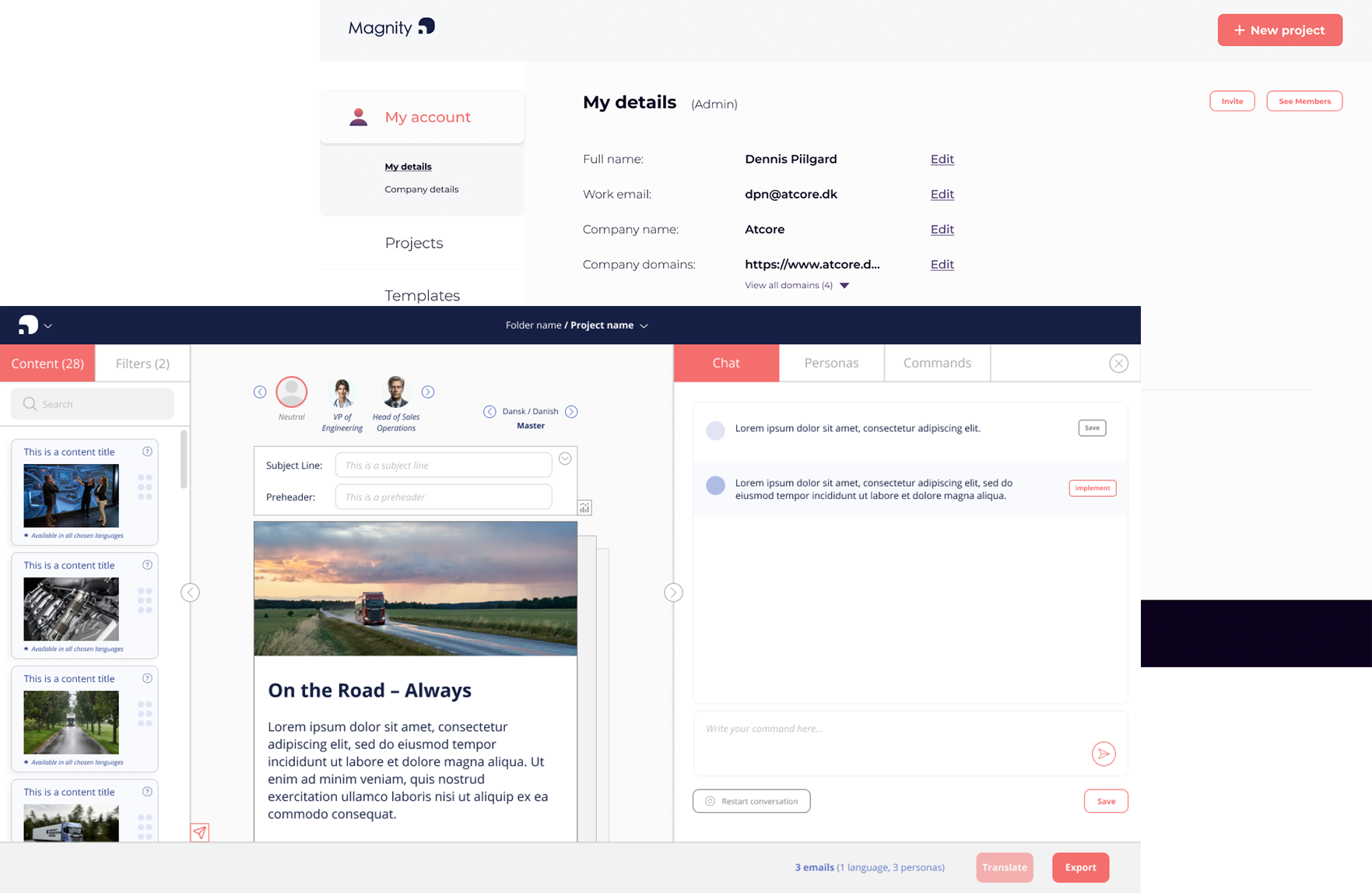
Magnity helps marketing teams build more control into content creation and review. Instead of treating compliance as a final checkpoint, teams can bring it into the workflow earlier.
With Magnity, teams can create content within structured processes, align outputs to brand and rule frameworks, and make review more consistent across channels. That helps reduce bottlenecks while improving visibility into what is being created and approved.
For teams working on marketing compliance, that means you can:
- create content within guided workflows
- apply review criteria more consistently
- support stronger ai content governance across teams
- improve ai content auditing with clearer structure
- reduce the risk of off-brand or non-compliant content going live
If you are building a more scalable review process, Magnity can help connect content production, review, and compliance in one place.
See what Magnity can do for your team