
AI compliance software for faster, safer marketing operations

AI compliance software helps teams manage policies, reduce review time, and keep work aligned with changing rules. For marketing teams, that matters because compliance is rarely a one-time check. It is an ongoing process across content creation, approvals, publishing, updates, and reporting.
As more teams use AI in their daily workflows, the compliance challenge grows. You need to know what was created, who approved it, which rules applied, and where risk may appear. That is where AI compliance software becomes useful. It gives teams a more structured way to manage governance, document decisions, and automate repeatable checks without slowing down production.
For organizations working across markets, channels, and teams, that structure is becoming essential.
What is AI compliance software?
AI compliance software is software that helps organizations monitor, document, and manage compliance requirements tied to AI use, content production, workflows, and internal controls. Depending on the setup, it can support policy enforcement, audit trails, risk reviews, approval routing, content checks, and ongoing monitoring.
Some tools are built for enterprise governance. Others are focused on workflow execution. The most useful setups often connect both sides. They help teams define rules and then apply those rules in day-to-day operations.
For marketing teams, this can include:
- reviewing content against internal and external requirements
- tracking approvals and version history
- documenting who changed what and when
- supporting legal and brand review processes
- reducing manual work through repeatable compliance checks
- creating a clearer process for publishing content at scale
Why AI compliance software matters
Manual compliance work is slow, inconsistent, and hard to scale. Teams often rely on spreadsheets, email chains, scattered comments, and memory. That creates risk. Important checks get missed. Reviews happen too late. Content is delayed. Audit documentation becomes difficult to reconstruct.
AI compliance software helps by making compliance more operational. Instead of treating compliance as a final gate, teams can build it into the workflow from the start.
That leads to practical benefits:
- fewer manual review bottlenecks
- better consistency across teams and markets
- faster turnaround on approvals
- clearer documentation for audits and internal reviews
- earlier identification of policy, legal, or brand risk
- better scalability as content volume grows
This is especially relevant for marketing organizations using AI to produce more content across email, social, landing pages, paid media, and web pages.
Key features to look for
Not every AI governance software platform solves the same problem. Some focus on enterprise policy management. Others focus on execution and monitoring. If your goal is to support compliant marketing operations, look for features that help your teams work faster without losing control.
Policy and rule managementThe software should make it easier to define and maintain the rules that content and workflows need to follow. That can include legal standards, privacy requirements, brand rules, channel-specific limitations, and market-specific guidance.
Workflow automationGood compliance automation software reduces repetitive admin work. It should support approval routing, task assignment, reminders, escalation paths, and status tracking so teams do not have to manage compliance manually.
Audit trails and documentationOne of the most valuable features is clear documentation. Teams should be able to see what was reviewed, what decisions were made, which evidence was attached, and who approved the final output.
Risk visibilityStrong tools help teams identify issues before they become bigger problems. That might include flagging missing approvals, highlighting content that needs legal review, or surfacing patterns that suggest process gaps.
Content-level checksContent compliance software should support reviews at the asset level. That includes checking copy, claims, mandatory disclaimers, restricted language, metadata, or workflow status before publication.
Support for changing requirementsCompliance is not static. Software should make it easy to update policies, workflows, and review criteria as regulations, internal standards, or campaign requirements change.
AI governance software vs compliance automation software
These terms are related, but they are not always used in the same way.
AI governance software is usually broader. It focuses on oversight, accountability, risk classification, documentation, and policy management across AI systems and use cases.
Compliance automation software is more execution-oriented. It helps teams automate tasks such as routing reviews, collecting approvals, logging evidence, and monitoring workflows.
In practice, most organizations need both. Governance defines the rules. Automation helps teams apply them consistently. If you are evaluating tools for marketing operations, the best option is often a platform that connects governance standards with content workflows.
Where content compliance software fits in
Marketing compliance often comes down to the content itself. Is a claim approved? Is the language appropriate for the market? Does the asset include required legal text? Was the final version reviewed by the right stakeholder?
That is where content compliance software becomes especially valuable. It supports the actual production process, not just the policy layer above it.
For content teams, this can help with:
- reviewing campaign assets before publishing
- making approval workflows easier to manage
- keeping version control organized
- reducing back-and-forth between marketing and legal
- scaling content production without losing oversight
- creating a clearer record of compliance decisions
This matters even more when AI-assisted content production increases output volume. More content means more opportunities for inconsistency if the process is not built to handle it.
How Magnity helps
Magnity helps marketing teams build compliance into content operations instead of treating it as a separate manual step. Teams can structure workflows, create content faster, and keep reviews more controlled across channels and markets.
For organizations working on marketing compliance, Magnity can help by supporting:
- more consistent content creation workflows
- clearer collaboration between marketing, legal, and compliance stakeholders
- better process visibility across campaigns and assets
- faster production with built-in governance support
- stronger control over approvals, structure, and reusable content operations
That makes Magnity a practical fit for teams that need both speed and oversight. Instead of adding another disconnected review layer, teams can make compliance part of how content gets planned, created, and delivered.
See what Magnity can do for your team
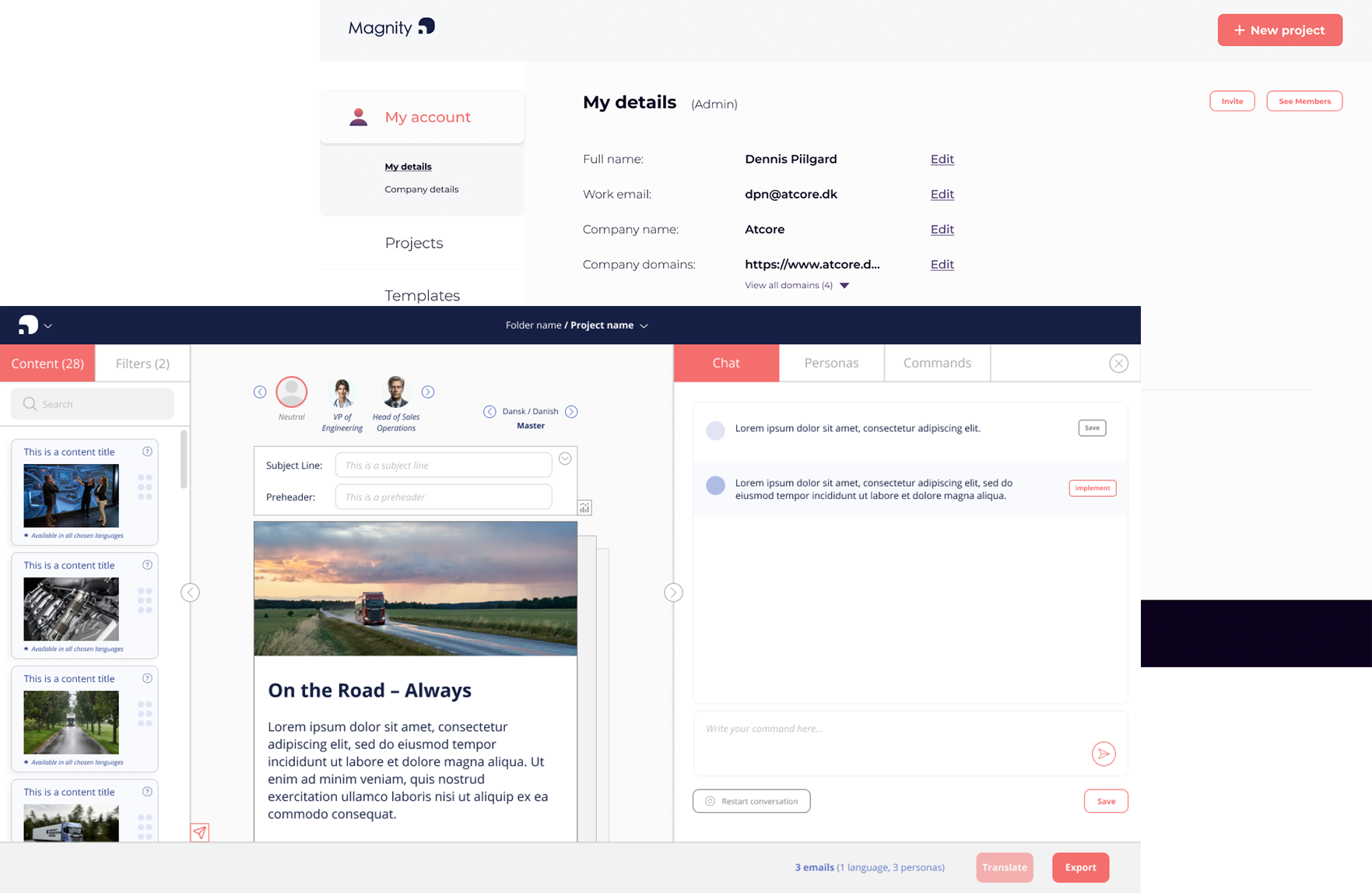
Marketing compliance is no longer a side issue. It is part of how modern marketing operations function. It shapes content governance, strengthens the marketing workflow, and helps organizations manage risk without losing momentum.
Magnity gives marketing teams the infrastructure to make compliance operational, not reactive. If your team is building content at scale and needs a more dependable system for planning, reviewing, and publishing with confidence, Magnity is designed for exactly that.
How to choose the right AI compliance software
The right solution depends on where your biggest bottlenecks are. Some teams need stronger governance documentation. Others need better review workflows. Others need asset-level controls for content production.
When evaluating options, focus on a few practical questions:
- which compliance tasks still rely on manual coordination
- where approvals tend to slow down publishing
- whether teams can easily document decisions and evidence
- how well the software fits existing content and marketing workflows
- whether the system can scale across regions, teams, and channels
- how quickly policies and review criteria can be updated
It is also worth being specific about what the software actually automates. Some tools mainly offer rules-based workflows. Others include more advanced analysis and monitoring. The value depends on how well those capabilities match your process, data quality, and operational needs.
Common mistakes to avoid
Many compliance software projects become harder than they need to be because teams start too wide or expect the tool to solve process issues on its own.
Common mistakes include:
- trying to automate every compliance process at once
- buying software before defining internal workflows clearly
- assuming AI removes the need for human review
- ignoring change management and team adoption
- failing to align legal, compliance, and marketing teams early
- choosing a tool that does not fit real content operations
A better approach is to start with the highest-friction area, improve that workflow, and expand from there.
Final thoughts
AI compliance software can help organizations reduce manual work, improve oversight, and create a more reliable way to manage compliance at scale. For marketing teams, the biggest value often comes from making governance practical inside real content workflows.
The goal is not to add more process for the sake of it. The goal is to make it easier to produce content that is faster to review, easier to document, and safer to publish.
That is where the combination of clear governance, smart automation, and content-focused workflow design starts to make a real difference.