Why AI is creating a compliance bottleneck

AI is helping marketing teams move faster. It can draft emails, adapt messaging for different channels, and scale content production in a way that manual teams simply cannot match. But that speed creates a new problem. Compliance processes were built for slower workflows, smaller content volumes, and more predictable review cycles. As AI accelerates production, many teams are discovering that governance has not kept up.
This is why compliance is becoming a more urgent priority. The bottleneck is not caused by AI alone. It appears when high-volume content creation meets manual approval processes, fragmented governance, and rising regulatory pressure.
AI increases content velocity faster than compliance can respond
Traditional review processes depend on tickets, handoffs, and manual sign-off. That model already struggled in regulated industries. With AI, the gap gets wider. Marketing teams can now generate large volumes of campaign assets in minutes, while compliance teams are still expected to review risk, disclosures, wording, approvals, and data use with the same human capacity as before.
Approval queues get longer. Launches slow down. Friction grows between marketing and compliance. Without stronger governance, both sides end up blocked by a process that was never designed for this level of speed or scale.
More AI content means more compliance exposure
AI-generated content brings real productivity gains, but it also introduces new forms of risk. Biased outputs, inaccurate claims, weak transparency, and poor explainability can all turn into compliance issues if they are not caught before publication.
If a model generates misleading product language, unsupported statistics, or incomplete disclosures, someone still needs to catch that. If content is personalized using customer data, teams may also need to show how decisions were made and whether consent requirements were respected. That adds more complexity to every review cycle.
This is where ai compliance becomes a workflow issue, not just a legal one. If the process cannot identify risk early, route content to the right reviewers, and document what happened, the bottleneck builds quickly.
Regulation is getting more complex at the same time
AI content production is rising just as regulation becomes harder to manage. Teams are dealing with more rules around transparency, data use, labeling, consent, explainability, and auditability. Instead of reviewing content against one stable checklist, compliance teams are working against a moving target.
That creates uncertainty in day-to-day execution. Was this content generated by AI? Was it reviewed properly? Who approved it? What data informed it? Can the logic be explained? Is there a record if someone asks for it later?
Without clear ai governance, teams spend too much time chasing answers that should already be built into the workflow.
The real issue is not AI. It is unstructured AI
AI itself is not the bottleneck. Unstructured AI is. When AI is layered onto existing marketing workflows without clear rules, escalation paths, audit trails, and review logic, it adds complexity instead of reducing it.
That is why ai risk management needs to be built into the workflow itself. Teams need systems that can evaluate content against configurable rules, flag risk clearly, support remediation, and escalate edge cases to humans when judgment is needed. They also need a reliable record of what was checked, what changed, and who made the decision.
The way forward is not less AI. It is better governed AI.
Manual review does not scale with AI output
Many compliance teams still rely on manual review as the main safeguard. That approach may feel safer, but it does not scale when AI is producing far more content, far more often. Reviewers get overloaded, response times stretch, and consistency starts to break down.
That inconsistency creates more risk. Similar assets may get different decisions. Important issues may be missed in one review and flagged in another. Teams may struggle to show that standards were applied consistently across channels, markets, or business units.
Modern ai marketing compliance needs a mix of automation and oversight. Automated scanning can handle repeatable checks. Structured workflows can route content based on risk. Human reviewers can focus where judgment matters most. That is a far more practical model than expecting manual teams to absorb unlimited AI output.
How Magnity helps remove the bottleneck
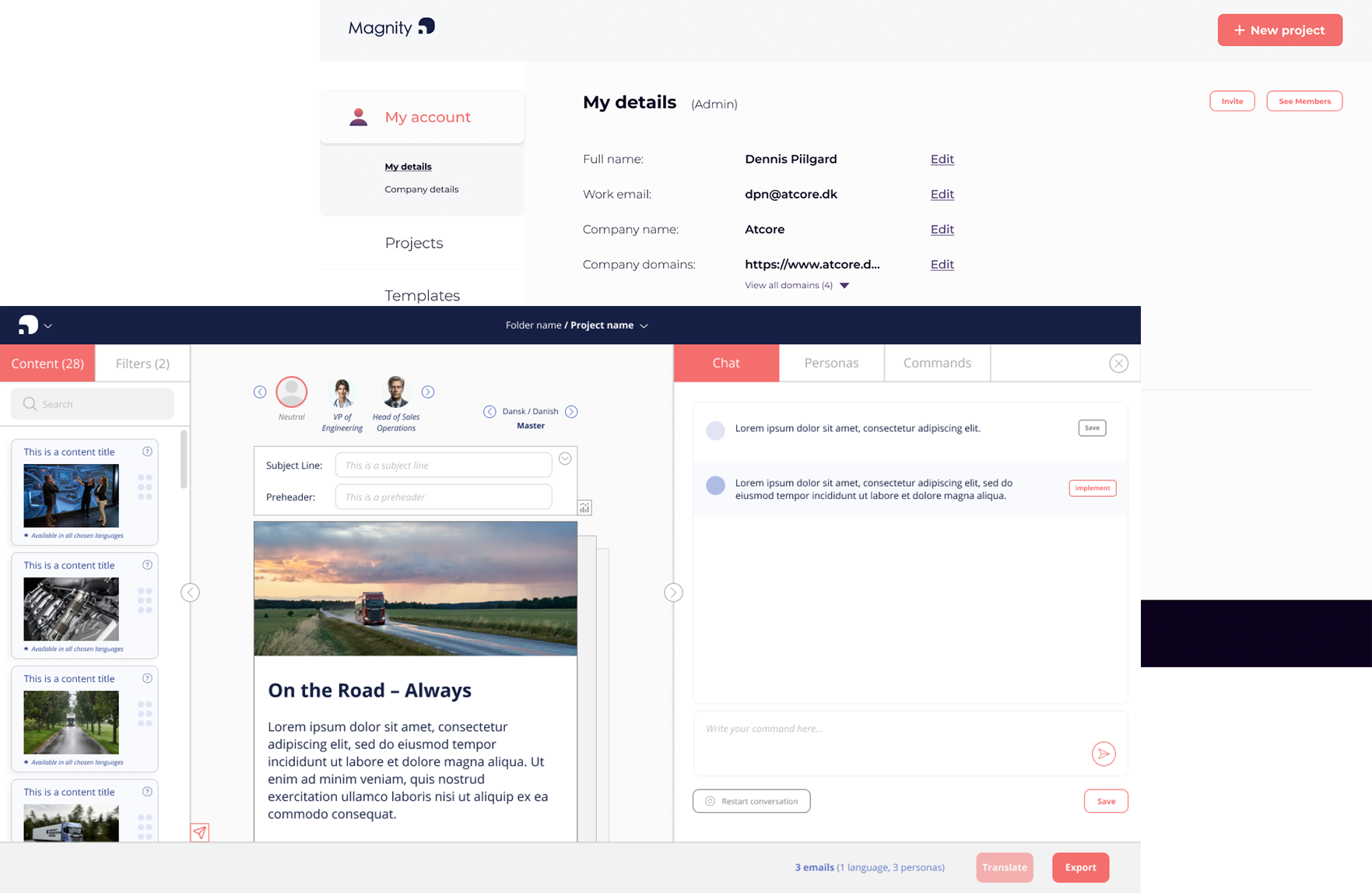
Magnity helps teams bring compliance closer to the content workflow instead of treating it as a separate step at the end. That matters because most delays happen when content moves quickly through creation and then slows down during review, approval, and remediation.
With Magnity, teams can build a more structured process for content creation and validation. That makes it easier to spot issues earlier, align around shared standards, and reduce unnecessary back-and-forth between marketing and compliance.
For businesses working with AI-generated or AI-assisted content, this supports stronger ai content governance. It helps connect content velocity with the controls needed to manage risk in a practical way.
Magnity also makes it easier to operationalize ai governance at scale. When workflows are clearer and content operations are more structured, teams are better equipped to maintain consistency, document decisions, and support audit readiness without slowing execution more than necessary.
That is especially important when content volumes are rising and regulatory expectations are becoming more demanding. Instead of forcing teams to choose between speed and control, Magnity helps create a workflow where both can improve together.
Content governance is now a growth issue
There is a clear business cost when compliance cannot keep pace. Campaigns are delayed. Teams work around process. Trust breaks down between functions. Over time, AI adoption becomes harder because marketing sees compliance as a blocker and compliance sees marketing as a source of unmanaged risk.
A better approach is to treat ai content governance as an enabler of scale. When governance is built into content operations, teams can move faster with more confidence. Review cycles become clearer. Risk is surfaced earlier. Documentation is easier to maintain. Compliance becomes part of execution rather than a final barrier to it.
That shift matters for any organization investing in AI-led content production. The advantage does not come from using AI alone. It comes from being able to operationalize it responsibly.
What effective ai governance looks like
To reduce bottlenecks, organizations need governance that matches the speed of modern content workflows. In practice, that usually includes a few core building blocks.
- Clear rules for how AI can be used in content creation and personalization
- Centralized control over assets, versions, approvals, and content provenance
- Automated checks for compliance risks, disclosures, and policy violations
- Human escalation paths for unclear, high-risk, or regulated cases
- Audit-ready logs that document what was created, reviewed, approved, and changed
- Ongoing review of AI outputs, policies, and model behavior as regulations evolve
These are not just governance features. They are what remove friction from the workflow.
Why this matters now
AI has already changed how marketing content gets made. Compliance programs now need to catch up to that reality. Teams that continue to rely on manual review and fragmented governance will face growing delays, more operational drag, and more difficulty proving control. Teams that invest in structured ai governance and scalable ai compliance processes will be in a much stronger position to support growth.
That is the real reason AI is creating a compliance bottleneck. AI is not slowing marketing down. Weak governance is.
For organizations building modern content operations, ai marketing compliance is no longer a side issue. It is part of how faster, safer execution happens. With Magnity, that becomes easier to build into the way content gets created, reviewed, and approved every day.
See what Magnity can do for your team