
Medical device marketing compliance

Medical device marketing compliance is about making sure every message, claim, image, and campaign asset reflects what the device is actually intended to do, who it is for, and how it can be promoted responsibly. For marketing teams, that means compliance is not a last-minute approval step. It is something that needs to shape content from the beginning.
That applies across product pages, brochures, emails, paid campaigns, social posts, videos, webinars, sales enablement content, and partner materials. If content helps influence how a device is understood or chosen, it needs to be reviewed through a compliance lens.
Why medical device marketing compliance is challenging
Medical device marketing teams work under pressure from several directions at once. They need to create clear and persuasive messaging, support product launches, adapt campaigns across channels, and respond quickly to market needs. At the same time, every claim and creative choice can carry regulatory risk.
Even small decisions can create problems. A headline can imply too much. A visual can suggest a broader outcome than the evidence supports. A reposted customer story can introduce wording that was never approved. A campaign adapted for a new market can miss local requirements. Compliance risk often appears in these details, not just in obvious errors.
That is why medical device marketing compliance needs structure. Without clear processes, teams end up relying on scattered reviews, manual checks, and inconsistent judgment calls.
What compliant medical device marketing requires
At its core, compliant medical device marketing depends on accuracy, clarity, and control. Messaging should stay aligned with the device’s intended purpose. Claims should reflect what can actually be supported. Risks and limitations should not disappear behind creative language or design choices. Content should also be appropriate for the audience and market where it is used.
In practice, that means teams need to stay in control of:
- product and performance claims
- audience targeting and channel use
- risk and limitation context
- visuals, charts, and comparative statements
- social media content and reposted material
- partner, influencer, and third-party communications
- market specific adaptations and approvals
The challenge is that these issues rarely sit in one place. They are spread across teams, tools, formats, and workflows.
Where compliance risk usually appears
Medical device marketing teams often run into the same compliance pressure points.
- Claims that drift beyond approved wording or available evidence
- Benefit-led messaging that downplays limitations or conditions of use
- Visual storytelling that implies outcomes too strongly
- Content adapted for new channels without proper review
- Social media posts that move faster than approval workflows
- Third-party content that gets reused without enough scrutiny
- Country rollouts that overlook local restrictions
- Internal teams working from outdated messaging versions
These issues are common because content production is rarely linear. One approved message can quickly turn into ten asset variations. A product page becomes a paid ad, a social post, an email, a sales deck, and a webinar slide. Each version creates a new chance for the message to change in ways that increase risk.
Why content operations matter for compliance
Compliance is often treated as a review problem, but in reality it is also a content operations problem. If teams do not have a clear way to manage approved messaging, source material, workflows, and revisions, review becomes slower and less reliable.
A good compliance setup is not just about catching issues before launch. It is about reducing the number of issues that appear in the first place. That means giving teams a better way to create content, adapt it, and keep it aligned across formats and markets.
Strong content operations usually include:
- approved source material and messaging foundations
- clear ownership across marketing, legal, regulatory, and product teams
- structured review flows for different asset types
- version control for claims and reusable content blocks
- templates that reduce ad hoc content creation
- auditability across drafts and iterations
When these foundations are missing, compliance work becomes reactive. When they are in place, teams can move with more confidence.
How Magnity helps with medical device marketing compliance
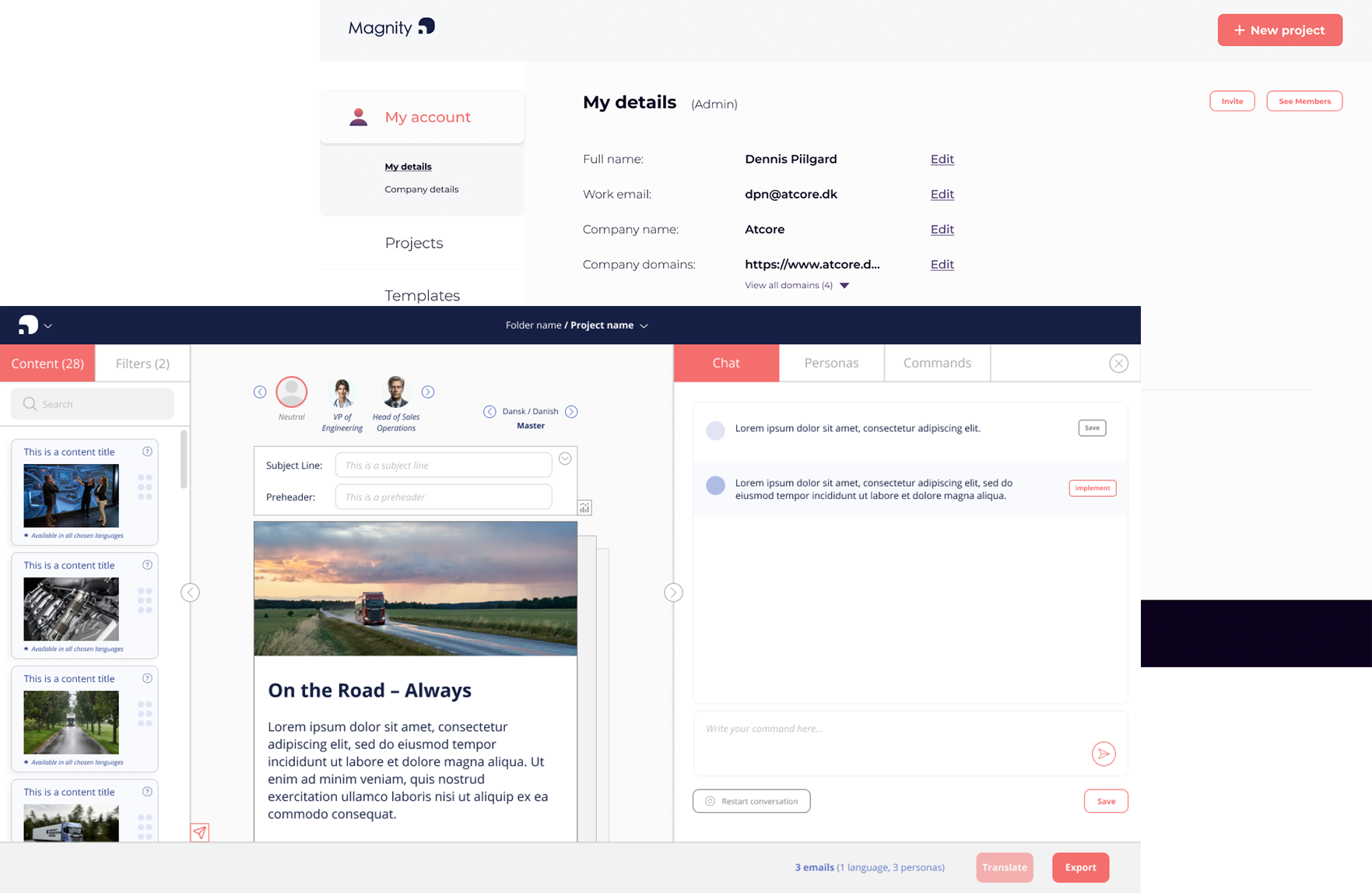
Magnity helps teams create content in a more controlled and structured way. That is especially valuable in regulated categories where the risk often comes from inconsistency, manual rework, and content being adapted too quickly across channels.
Instead of treating compliance as something that happens after content is written, Magnity helps teams build better content workflows from the start. Teams can work from approved inputs, create content in a more consistent way, and reduce the chance that messaging drifts as it moves between formats.
Magnity can help medical device marketing teams:
- build content from approved source material and messaging inputs
- keep claims and positioning more consistent across assets
- reduce manual rewriting across webpages, emails, campaigns, and sales materials
- structure content production with clearer templates and workflows
- support collaboration between marketing and review stakeholders
- create a stronger audit trail across iterations and approvals
- scale content across teams and markets with more control
This matters because compliance problems often start when teams are moving fast. A structured content workflow reduces those weak points.
See what Magnity can do for your team
Supporting review without slowing marketing down
One of the biggest frustrations for marketing teams is that compliance review can feel slow, inconsistent, and difficult to scale. Magnity helps by giving teams a more organized way to prepare content before it reaches reviewers. That means stronger first drafts, clearer source alignment, and less unnecessary rework.
When content creation is more structured, review teams can spend less time fixing preventable issues and more time assessing what actually matters. That can improve both speed and quality without lowering the compliance standard.
For medical device companies managing multiple campaigns, products, or markets, that operational improvement can have a real impact. It helps teams reduce bottlenecks while maintaining tighter control over messaging.
Compliance needs consistency across every channel
Medical device marketing does not happen in one place. A single campaign may include web content, paid media, email, organic social, webinar promotion, sales follow-up, and partner enablement. If each asset is created in isolation, inconsistencies appear fast.
Magnity helps teams work more consistently across channels by giving them a shared foundation for content creation. That makes it easier to carry approved messaging into different formats without recreating everything from scratch each time.
For compliance-focused teams, that consistency is important. It lowers the risk of mixed claims, conflicting phrasing, and off-message adaptations that create extra review cycles or compliance concerns later.
A smarter way to scale compliant content
As medical device companies grow, the compliance challenge usually grows with them. More campaigns, more content types, more stakeholders, and more regional variations create more room for mistakes. Manual processes do not scale well in that environment.
Magnity gives teams a better way to scale content production while keeping control over what is being said and how it is being reused. That does not replace legal or regulatory review. It helps teams arrive at review in a better state, with more consistency and less noise.
For marketing leaders, that means a more efficient path from approved inputs to usable content. For compliance stakeholders, it means fewer surprises. For the business, it means content operations that are easier to manage in a regulated environment.
Build medical device marketing with compliance in mind
Medical device marketing compliance is not just a regulatory issue. It is a content quality issue, a workflow issue, and a scale issue. Teams that treat it as part of their content operation are in a better position to create strong marketing without introducing unnecessary risk.