
Managing brand consistency across 30+ markets

Keeping a brand consistent across more than 30 markets is hard for even the most experienced marketing teams. The larger the organization gets, the more likely it is that teams will adapt messaging, visuals, templates, and legal wording in ways that slowly pull the brand apart. That is where brand compliance becomes essential.
Brand compliance is the discipline of making sure approved brand assets, messaging, tone of voice, and required legal elements are used correctly across every market and channel. It helps protect brand trust, improve operational efficiency, and create a more consistent customer experience, even when content is produced by many teams in many regions.
For global organizations, the challenge is rarely a lack of effort. It is usually a lack of structure. Local teams need flexibility to adapt content for language, culture, and market conditions. At the same time, central brand teams need confidence that the brand still looks, sounds, and behaves like one brand everywhere it appears.
Why brand compliance gets harder at scale
Brand consistency is relatively simple when one team creates and approves everything. It becomes far more complex when multiple regions, business units, agencies, and partners all contribute content. Small variations start to add up.
- Outdated logos remain in local presentations or sales materials
- Regional teams rewrite core messaging in ways that shift the intended meaning
- Templates are recreated manually instead of using approved versions
- Legal disclaimers differ across markets or are left out entirely
- Visual styles drift over time between email, social, web, and sales content
Each issue may seem minor on its own. Together, they weaken recognition, create friction in production, and increase risk. Customers notice when a brand feels inconsistent. Internal teams feel it too when they waste time searching for the latest approved assets or checking whether content follows the rules.
What strong brand governance looks like
Strong brand governance gives teams clear boundaries without slowing them down. It defines what must stay consistent across all markets and where local adaptation is allowed. That balance matters. If governance is too loose, the brand fragments. If it is too rigid, local teams will work around the process.
A practical brand governance model usually includes a few core elements.
- Clear brand guidelines that cover logos, typography, color, imagery, tone of voice, messaging, and legal requirements
- Approved templates for recurring content types such as emails, landing pages, presentations, and social posts
- A central place to store and update assets so teams can work from the latest approved versions
- Defined roles and approval flows so people know who owns what
- Regular training and communication so new and existing teams understand how to stay on brand
The goal is not to control every detail. The goal is to make it easier to do the right thing by default.
How to maintain brand consistency without slowing local teams down
When companies expand across regions, they need a repeatable model that supports both consistency and speed. A few practical habits make a big difference.
Create one source of truthTeams should never have to guess which logo, template, or message is current. A shared and trusted source of truth reduces confusion and cuts approval time. It also lowers the chance that outdated or off brand materials end up in market.
Build rules into workflowsGuidelines are important, but static documents are rarely enough on their own. The strongest compliance models bring approved assets, templates, and review steps directly into day to day content workflows. That is how governance becomes practical rather than theoretical.
Define what is global and what is localNot everything should be standardized to the same degree. Core brand identity, strategic messaging, and critical legal elements usually need tighter control. Local examples, language nuance, and campaign angles may need more flexibility. Teams work better when those boundaries are clearly defined.
Review and update regularlyBrands evolve. Markets change. Legal requirements shift. If guidance is not maintained, compliance becomes harder over time because teams stop trusting that the latest documentation is actually current.
The role of brand management software
Managing brand consistency across 30 or more markets is difficult to do through shared folders, email chains, and static PDFs alone. As complexity grows, brand management software becomes far more than a convenience. It becomes an operational foundation.
Brand management software helps central teams organize approved assets, maintain up to date guidelines, distribute templates, and support more consistent execution across regions. It can also improve collaboration by making it easier for teams to find what they need without relying on constant manual support from brand managers.
When done well, this kind of setup helps organizations:
- Reduce duplication and rework
- Improve speed to market
- Strengthen brand consistency across channels
- Lower the risk of non compliant content
- Make local teams more self sufficient
The best systems do not just store assets. They make compliant content creation easier than off brand work.
How Magnity helps global teams stay on brand
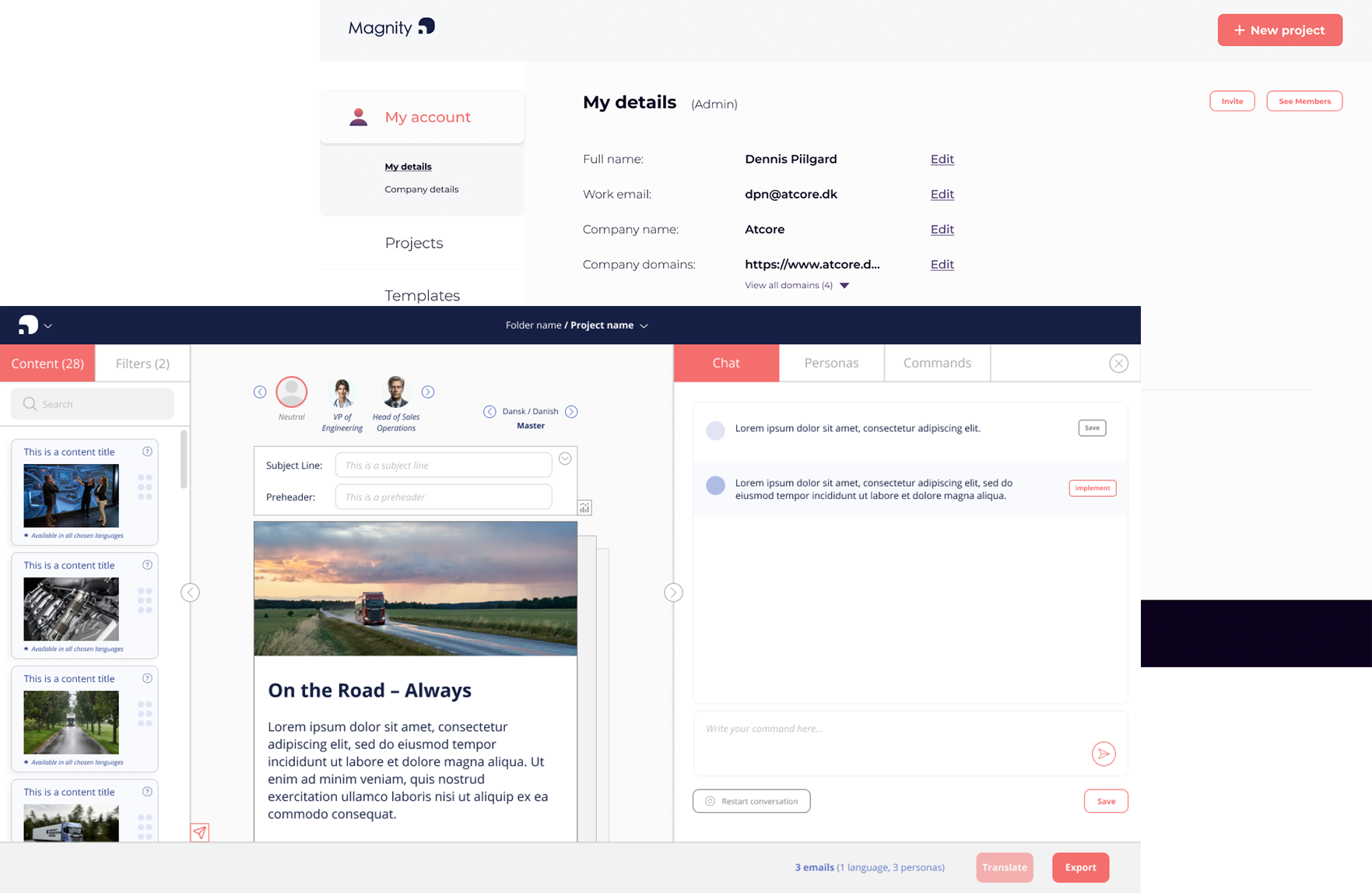
Magnity helps marketing teams create content within clear brand and compliance frameworks, so global execution becomes easier to manage at scale. Instead of relying on disconnected tools and manual review, teams can work from a shared content environment built to support consistency across markets.
With Magnity, organizations can structure content production around approved messaging, templates, and workflows. That makes it easier for local teams to create relevant content while staying aligned with global brand requirements. Central teams get more visibility and control. Local teams get more speed and clarity.
For companies managing content across many regions, Magnity can support brand compliance by helping teams:
- Work from approved content structures and templates
- Maintain a more consistent tone of voice across channels and markets
- Reduce manual back and forth in review and approval processes
- Scale content production without losing brand control
- Bring brand governance closer to the actual content workflow
This is especially valuable when multiple stakeholders are involved in producing emails, landing pages, campaign assets, and localized content. The more complex the setup, the more important it becomes to connect brand rules with the way content is actually created.
See what Magnity can do for your team
Key steps for improving brand compliance across markets
If your organization is trying to improve brand consistency across many regions, start with the fundamentals.
- Audit your current assets, templates, and market specific content
- Identify where the biggest brand consistency issues appear
- Document clear rules for visual identity, messaging, and legal requirements
- Centralize approved assets and make them easy to access
- Define approval flows and content ownership
- Train teams regularly and communicate updates clearly
- Use the right platform to support compliant execution at scale
Brand compliance is not a one time project. It is an ongoing operating model that supports trust, efficiency, and growth.
Final thoughts
Managing brand consistency across 30 plus markets requires more than a brand book. It requires clear brand governance, practical workflows, and systems that help people create the right content from the start. When those pieces are in place, brand compliance becomes easier to maintain and far more valuable to the business.
For teams looking to scale content creation without losing control, Magnity can help turn brand compliance from a bottleneck into a more efficient and repeatable way of working.