
Financial services marketing compliance that protects trust and keeps campaigns moving

Financial services marketing compliance sits at the point where content, regulation, and customer trust meet. Every campaign, landing page, email, and social post has to communicate clearly, stay accurate, and meet strict standards. That makes compliance a practical marketing issue, not just a legal one.
For teams working in banking, insurance, fintech, lending, payments, or investment services, the challenge is rarely a lack of ambition. It is the need to move fast without losing control. Reviews take time. Disclosures need to be right. Messaging must stay consistent across channels. And one small oversight can create legal, reputational, and operational risk.
Why financial services marketing needs a different level of compliance
Financial products and services affect decisions with real consequences. That is why marketing teams in this sector operate under closer scrutiny than most. Claims need to be supportable. Risks need to be presented fairly. Disclosures need to be visible and accurate. Teams also need a clear record of what was reviewed, changed, and approved.
That pressure grows when content production scales. A single campaign can involve web copy, paid ads, sales materials, nurture emails, product pages, and social assets. Each format creates its own compliance considerations, and each handoff increases the chance of inconsistency.
For many teams, the real issue is not understanding that compliance matters. It is building a workflow that makes compliant execution repeatable.
Common compliance risks in financial services marketing
Risk often appears in small details rather than obvious mistakes. A headline may overstate a benefit. A landing page may miss a required disclosure. A social post may simplify a regulated offer too far. A team may publish an updated version of an approved asset without a final review.
- Unclear or overstated claims about products, performance, or outcomes
- Missing, weak, or poorly placed disclosures
- Inconsistent language across channels and campaign assets
- Approval bottlenecks that encourage shortcuts
- Limited visibility into version history and review status
- Manual workflows that make recordkeeping harder
- Higher exposure when working across regions, teams, or partner networks
These issues do not just slow marketing down. They make it harder to maintain trust and harder to prove that the right checks happened before content went live.
What a strong compliance workflow looks like
A good compliance process should support the business, not bring it to a halt. That starts with clear ownership. Marketing, legal, compliance, and brand teams need to know who reviews what, when, and against which standards.
Strong workflows usually include a few core elements:
- Clear review stages with defined responsibilities
- Approved language and reusable content patterns
- Structured feedback and change tracking
- Documented approvals and audit visibility
- Consistent review across email, web, social, and campaign content
- Training that helps teams spot issues earlier in the process
When these pieces are missing, compliance becomes reactive. Teams spend more time chasing approvals, clarifying edits, and checking final versions manually. When the process is well built, compliance becomes easier to manage at scale.
Compliance across channels
Financial services marketing does not live in one place. A campaign may begin with a paid ad, move to a landing page, continue through email, and be reinforced through social and sales content. That means compliance cannot be treated as a final checkpoint on a single asset. It has to run through the full content journey.
On websites and landing pages, teams need to pay close attention to claims, disclaimers, form language, and page updates. In email, review often focuses on promotional wording, disclosures, opt-out mechanics, and audience targeting. On social media, the main challenge is keeping short-form content accurate and balanced without losing clarity. In sales and campaign materials, version control becomes especially important because approved content can quickly drift as teams adapt it for different uses.
The more channels you activate, the more valuable it becomes to manage compliance through one connected workflow.
How Magnity can help
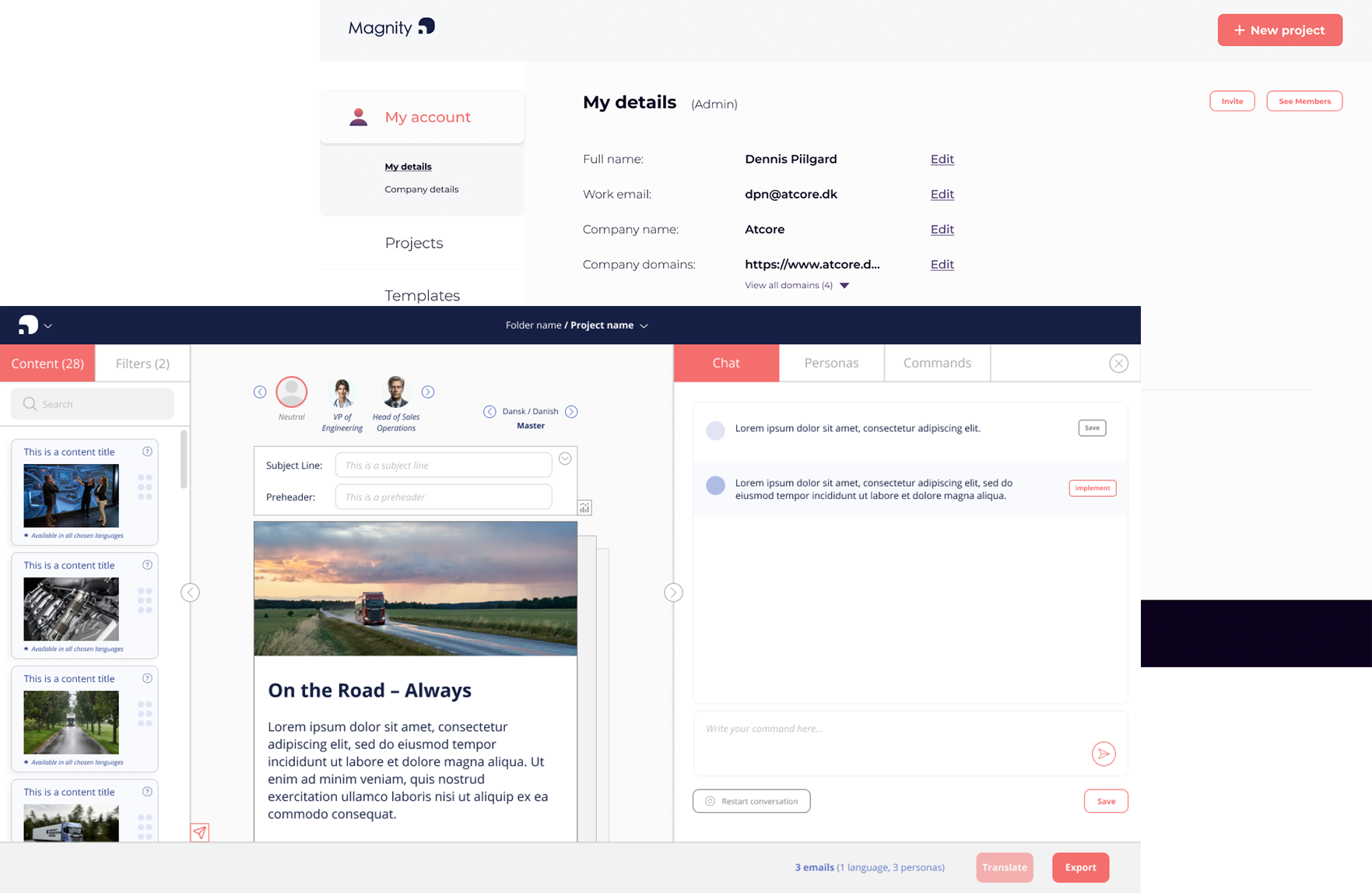
Magnity helps marketing teams bring more structure to content operations in regulated environments. Instead of managing reviews across scattered documents, messages, and manual handoffs, teams can create, refine, and coordinate content in a more controlled process.
For financial services marketing compliance, that matters in a few practical ways:
- It helps teams keep content development and review in one place
- It supports clearer collaboration between marketing and compliance stakeholders
- It makes it easier to maintain consistency across channels and assets
- It gives teams better visibility into what is being created, reviewed, and updated
- It supports scalable content production without losing oversight
Magnity does not replace legal judgment or compliance expertise. What it can do is make the content workflow easier to manage, easier to follow, and easier to scale.
See what Magnity can do for your team
Build a compliance process that can keep up
Financial services teams need more than careful wording. They need a repeatable way to create compliant content across high volumes, multiple channels, and growing stakeholder groups. That is where a structured workflow becomes a competitive advantage. It helps teams reduce friction, improve control, and keep quality high as content demands grow.