Marketing governance in the age of AI

AI has changed how marketing teams plan, produce, approve, and optimise work. It has also raised the stakes. More channels, more assets, more data, and faster execution can create real value, but only if the right guardrails are in place. That is where a strong marketing governance framework matters.
For enterprise teams, governance is no longer a nice-to-have process layer. It is the structure that helps marketing stay aligned with business goals, protect brand standards, manage risk, and keep decision-making clear even as AI speeds everything up.
This page explains what a modern marketing governance framework looks like, why it matters more in AI-driven marketing, and how teams can put the right structure in place without slowing work down.
What is a marketing governance framework?
A marketing governance framework is the set of policies, roles, workflows, and measurement practices that guide how marketing decisions are made and how work gets executed.
It gives teams a clear way to manage planning, approvals, data use, campaign execution, content quality, and performance review. In practice, that means fewer grey areas around ownership, fewer process gaps, and more confidence that marketing activity supports wider business priorities.
At its best, a marketing governance framework helps teams answer questions like these:
- Who approves what, and when?
- How do we make sure campaigns meet legal, brand, and privacy requirements?
- How are goals tied to measurable outcomes?
- What should happen when AI is used to create or optimise content?
- How do marketing, legal, compliance, sales, and leadership stay aligned?
Why AI has made marketing governance more urgent
AI can improve speed and scale across content creation, localisation, workflow automation, and campaign optimisation. But it can also create new points of failure if teams do not have clear governance in place.
Without structure, AI can introduce inconsistent messaging, unclear accountability, weak approval trails, data handling risks, and content that moves faster than internal review processes can keep up with.
That is why many organisations are now looking beyond general compliance rules and building an AI governance framework that works inside day-to-day marketing operations.
Marketing teams need clear rules for how AI is used, where human review is required, what data can be used safely, and how outputs are checked before publication. When those rules are missing, the risk is not just operational. It can affect brand trust, legal exposure, and overall business performance.
The link between marketing governance and enterprise governance
Marketing does not operate in isolation. A strong governance model should connect with wider enterprise governance so marketing decisions support broader business controls, risk management, and strategic priorities.
That connection matters even more when AI is involved. AI use in marketing can touch customer data, content claims, consent management, regional regulations, procurement, and IT policies. If marketing governance sits apart from the rest of the business, gaps appear quickly.
Enterprise governance creates the broader structure for decision-making and accountability across the organisation. Marketing governance brings that structure into the marketing function, with practical rules for campaigns, content, data, workflows, and technology use.
When the two are aligned, teams can move faster with fewer surprises. Leadership gets better visibility. Marketing gets clearer boundaries. And cross-functional teams can work from a shared understanding of risk, responsibility, and business value.
Core elements of a modern marketing governance framework
A useful framework should be practical, not theoretical. It needs to support daily work while giving leadership the visibility and control they need.
1. Clear policiesPolicies define the rules that guide marketing activity. These should cover content standards, brand usage, campaign approvals, privacy requirements, data handling, AI use, and record-keeping.
Good policies reduce ambiguity. They make it easier for teams to act confidently because expectations are visible and consistent.
2. Defined roles and accountabilityGovernance breaks down quickly when ownership is unclear. Teams need a shared understanding of who is responsible for strategy, review, sign-off, compliance input, platform management, and performance tracking.
This is especially important in enterprise settings where many stakeholders shape a single campaign or content workflow.
3. Documented workflowsGovernance needs to live inside real processes. That includes intake, briefing, creation, review, approval, publishing, and measurement. If these workflows are not documented and repeatable, teams end up relying on memory, informal habits, or last-minute judgement calls.
AI increases output volume, so repeatable workflows become even more important. The more content and activity you generate, the more you need process discipline.
4. Data and privacy controlsAny serious marketing governance framework should define how data is collected, accessed, used, retained, and reviewed. That includes rules for consent, audience segmentation, platform permissions, and the use of data in AI-supported tasks.
These controls help reduce compliance risk and support better data quality across campaigns and reporting.
5. Measurement and reviewGovernance should improve performance, not just reduce risk. That is why frameworks need clear metrics and review points. Teams should be able to track whether policies are being followed, where bottlenecks appear, how quickly approvals move, and whether marketing execution is supporting business goals.
Regular review also helps teams refine the framework over time instead of treating governance as a one-off exercise.
What an AI governance framework should cover in marketing
An AI governance framework for marketing should do more than state broad principles. It should define how AI is used in practice.
That often includes:
- Approved use cases for AI in content, planning, analysis, and automation
- Human review requirements before publication or launch
- Rules for using customer, prospect, or internal data in prompts and workflows
- Brand and tone controls for AI-generated outputs
- Version control and approval logging
- Escalation paths for high-risk use cases
- Guidance for testing, monitoring, and improving AI-supported workflows
The goal is not to block AI adoption. It is to make AI usable at scale in a way that supports quality, accountability, and trust.
Common signs your governance model needs work
Many teams already have fragments of governance in place, but they are spread across documents, systems, and informal habits. That usually shows up in predictable ways:
- Approval steps vary by team or region
- Content goes live without a clear review trail
- Legal and compliance checks happen too late
- AI tools are used without shared guidance
- Data access rules are inconsistent
- Reporting focuses on activity instead of decision-making
- Ownership is unclear when issues appear
If any of that feels familiar, the problem is rarely effort. It is usually structure.
How to build a marketing governance framework that teams will actually use
The strongest frameworks are clear enough to guide behaviour and practical enough to fit daily work. A useful starting point is to assess your current state, identify the biggest gaps, and prioritise the few changes that will improve clarity and control fastest.
For most teams, that means:
- Reviewing current policies, workflows, and approval paths
- Identifying where AI is already being used across marketing
- Defining ownership across marketing, legal, compliance, IT, and leadership
- Documenting standard workflows for creation, review, approval, and publishing
- Setting rules for data use, privacy, and AI-supported work
- Choosing a small set of governance KPIs
- Running regular reviews to refine the model over time
It is usually better to build governance in layers than to try to redesign everything at once. Start with the highest-risk or highest-volume workflows, then expand from there.
Where marketing governance software fits in
Spreadsheets, shared folders, and scattered approval chains are hard to manage at scale. As complexity grows, teams often need marketing governance software to bring structure into everyday execution.
The right platform can help centralise workflows, standardise approvals, improve visibility, support audit trails, and reduce manual friction across teams. It can also make governance easier to follow because the process is built into the work itself.
This matters in AI-supported marketing, where speed can outpace oversight if the operating model depends on manual coordination alone.
How Magnity helps marketing teams govern AI-driven work
Magnity helps teams bring structure to modern marketing operations without making workflows heavier than they need to be. For organisations working to strengthen compliance and governance, that matters.
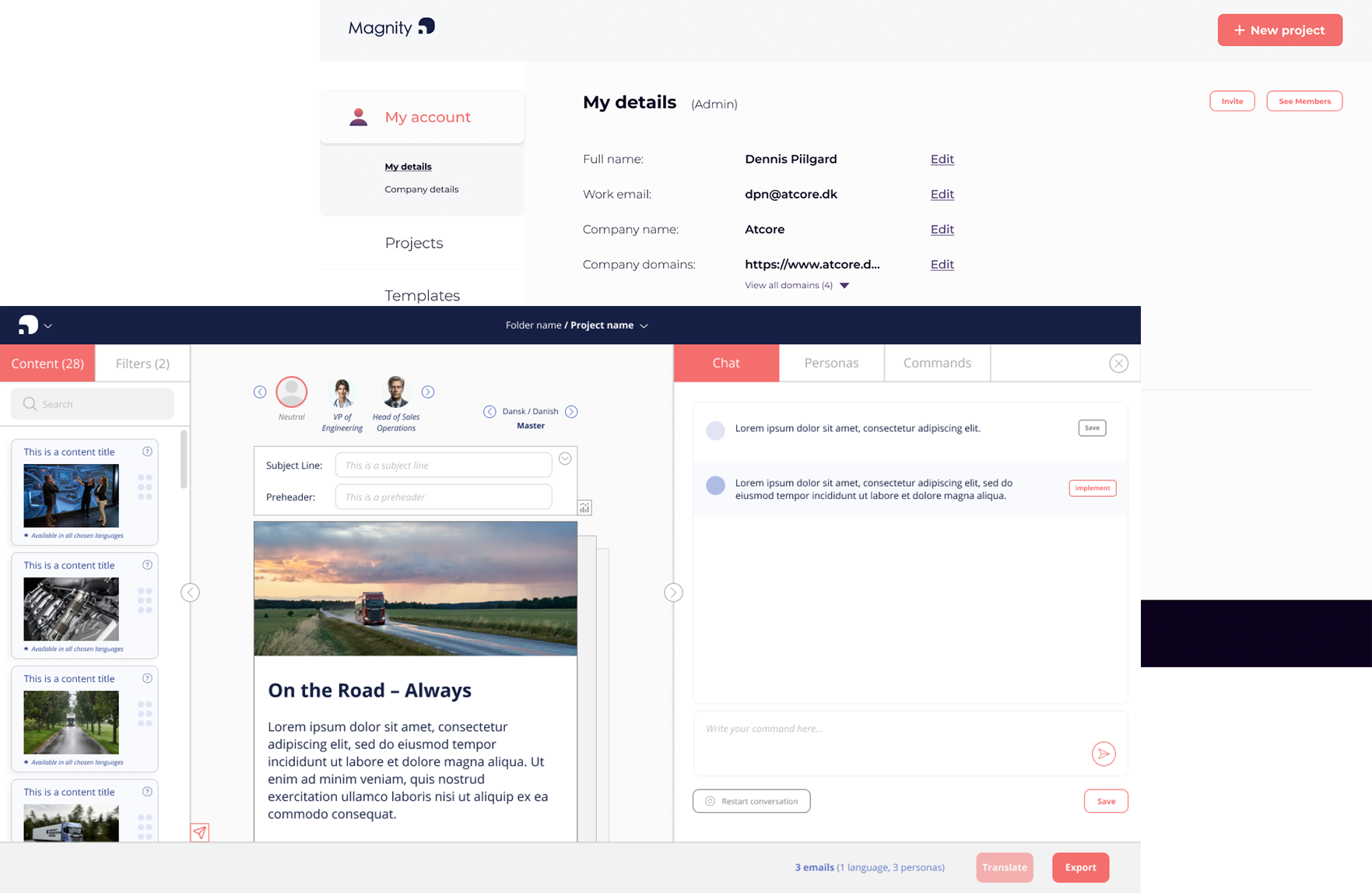
With Magnity, teams can create more consistent content workflows, improve collaboration across stakeholders, and support better control over how marketing work is planned, reviewed, and produced. That makes it easier to operationalise a marketing governance framework instead of leaving it as a static document.
Magnity can support governance efforts by helping teams:
- Create content within defined workflows and approval structures
- Keep messaging aligned across channels and teams
- Bring more consistency to content production at scale
- Support review and collaboration across marketing and other stakeholders
- Reduce process friction while keeping standards visible
For teams exploring AI-supported marketing, Magnity can also help create a more controlled environment for scaling content operations. That gives enterprise teams a better foundation for putting an ai governance framework into practice in a way that stays connected to brand, process, and business priorities.
Marketing governance is becoming a growth issue
Governance is often framed as a control mechanism. It is that, but it is also a growth enabler. When teams have clear policies, defined ownership, repeatable workflows, and the right supporting systems, they can execute with more confidence and less waste.
That becomes even more important as AI expands the scale and speed of marketing execution. A strong marketing governance framework helps organisations use that speed well. It creates the conditions for better decisions, stronger compliance, and more reliable performance.
If your organisation is investing in AI, content operations, and cross-functional marketing execution, governance should be part of the foundation, not an afterthought.
See what Magnity can do for your team