
The hidden cost of marketing review cycles

Marketing teams rarely struggle because they lack ideas. More often, they struggle because good work gets stuck in review. A campaign can be well planned, on brand, and ready to launch, yet still lose momentum when approvals drag on, feedback is scattered, or no one is fully clear on who signs off when.
That is where the marketing approval process has a direct impact on performance. When review cycles are unclear or too slow, the cost is not limited to internal frustration. It shows up in missed deadlines, weaker campaign results, duplicated work, and avoidable compliance risk.
This is why a well-structured marketing approval process matters. It helps teams move from draft to launch with fewer delays, stronger control, and better visibility across every review step.
Why review cycles become expensive fast
On paper, an extra round of review may seem harmless. In practice, each added loop creates friction. Content waits for responses. Teams work in parallel without seeing the latest version. Stakeholders give overlapping or conflicting feedback. Deadlines move, often quietly at first, then all at once.
The result is a review workflow that slows down the entire content operation.
These hidden costs tend to show up in five places:
- Lost time: Teams spend hours chasing approvals instead of creating, refining, and launching content.
- Lower output: The slower one asset moves, the fewer campaigns the team can deliver in a given period.
- Version confusion: When comments live across email, chat, documents, and decks, it becomes harder to know what is current and what has already been approved.
- Weaker quality control: Important checks can be missed when the process is inconsistent or rushed late in the cycle.
- Compliance exposure: If legal, brand, or regulatory checks happen too late or not at all, the business takes on unnecessary risk.
What slows down a marketing approval process
Most delays do not come from one dramatic failure. They come from a series of small breakdowns in the content approval process.
Too many approversWhen many people are involved but decision rights are unclear, review cycles expand. One person suggests edits, another reopens approved sections, and a third assumes someone else owns final sign-off. The content keeps moving, but not forward.
Feedback spread across channelsA comment in email, a message in Slack, edits in a document, and a call that changes direction. This is how a simple review workflow turns into a tracking problem. Teams waste time reconciling input instead of acting on it.
No clear stage gatesIf internal review, brand review, stakeholder review, and legal review are mixed together, content often goes out for feedback before it is ready. That creates unnecessary rounds and increases the chance of contradictory comments.
No deadlines for reviewersContent creators usually work to deadlines. Reviewers often do not. Without response windows, reminders, or escalation paths, approvals slip behind other priorities.
Poor handoff disciplineIf teams do not know when an asset is ready for the next step, work stalls between stages. A strong marketing review workflow needs clear handoffs, not just clear tasks.
The business impact of inefficient review workflows
When leaders think about content performance, they often focus on strategy, messaging, and channel mix. Those matter, but execution speed matters too. If content misses the right launch window, its value drops. If an asset takes too long to approve, the campaign may be less relevant by the time it goes live.
An inefficient marketing review workflow can affect the business in several ways:
- Campaign delays: Launches slip because sign-off happens too late.
- Higher production costs: Teams spend more time managing the process and less time producing useful work.
- Burnout and frustration: Rework and unclear feedback loops wear teams down.
- Inconsistent brand execution: Without a structured content approval process, assets may vary in tone, claims, and quality.
- More compliance risk: Missing approval checkpoints increases the chance of publishing content that should have been revised first.
What an effective content approval process looks like
A good process does not add bureaucracy for the sake of control. It gives the team a clear path from creation to approval to publication.
In practice, a strong marketing approval process usually includes:
- Defined roles: Everyone knows who creates, reviews, approves, and signs off.
- Separate review stages: Internal, brand, stakeholder, and compliance reviews happen in the right order.
- Centralized feedback: Comments, edits, and decisions are kept in one place.
- Version control: Teams work from the latest approved version, not duplicate files.
- Approval deadlines: Reviewers know when feedback is due.
- Auditability: The team can trace what changed, who approved it, and when.
This kind of review workflow helps teams reduce noise without losing control. It creates a process that is easier to manage and easier to trust.
How to reduce review cycle waste
If your current marketing review workflow feels slow, the fix is rarely to ask people to move faster. It is to make the process easier to follow.
1. Map the current workflowStart by documenting how content actually moves today, not how it is supposed to move. Look at where work stalls, where approvals overlap, and where feedback gets lost.
2. Clarify ownership at each stepEach stage should have a clear owner. That includes the person responsible for the work, the person approving it, and anyone who should be consulted or informed.
3. Separate reviewers by purposeBrand review is different from legal review. Strategic input is different from final approval. Grouping all feedback into one step usually creates more friction, not less.
4. Keep feedback in one placeA centralized content approval process makes it easier to compare comments, resolve conflicts, and maintain a reliable record of decisions.
5. Add deadlines and escalation rulesReviewers need timelines too. Setting response windows and escalation paths helps prevent approvals from stalling indefinitely.
6. Archive approved assets properlyFinal approved versions should be easy to find. This supports consistency, reuse, and accountability, especially for regulated marketing teams.
How Magnity helps teams streamline the marketing approval process
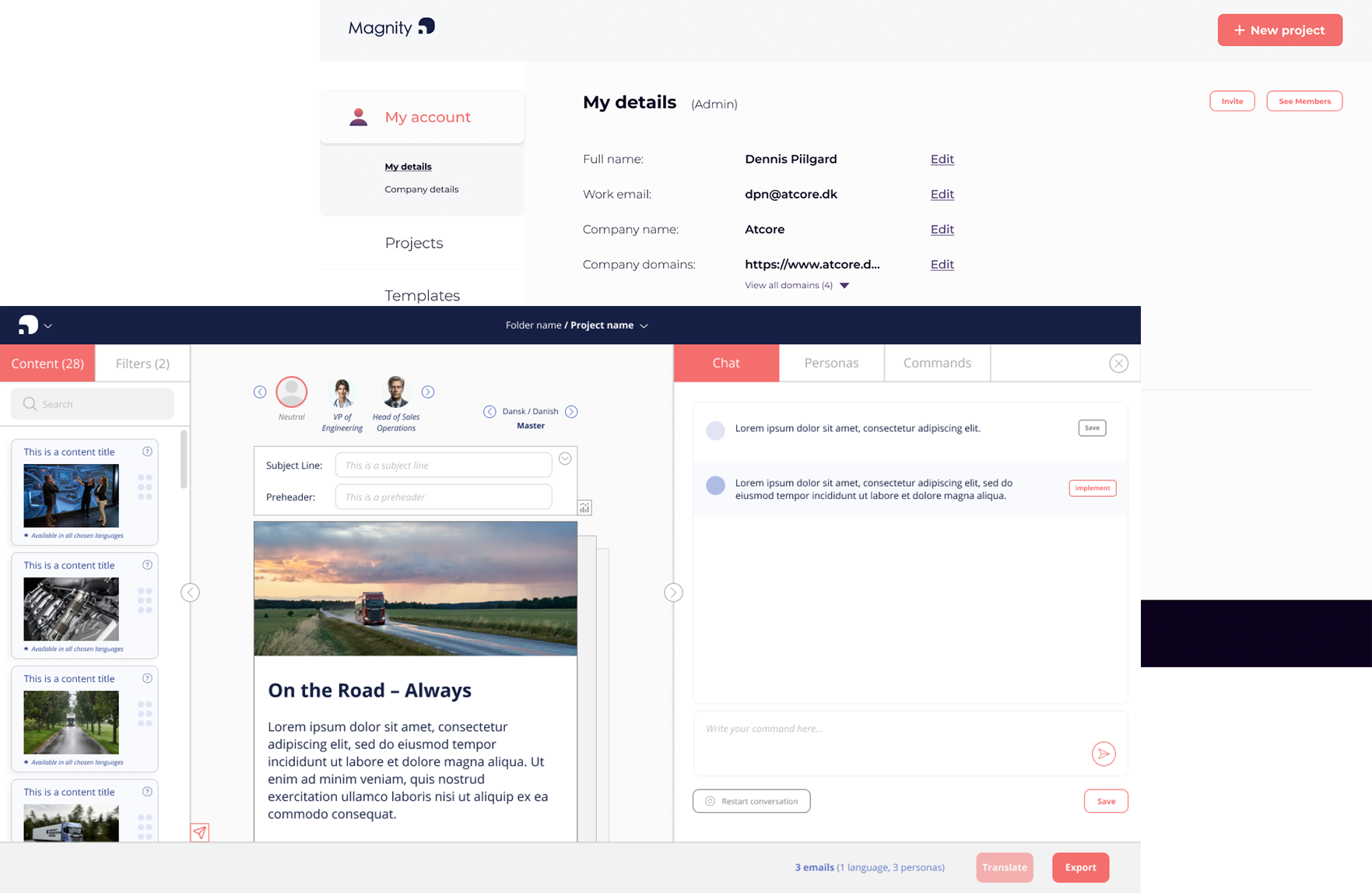
For teams working with complex campaigns, compliance requirements, and multiple stakeholders, manual review cycles create too much friction. Magnity helps reduce that friction by bringing content creation, review, approval, and compliance checks into one place.
With Magnity, teams can structure how content moves from draft to launch while making compliance review part of the workflow, not a separate step handled elsewhere. That makes it easier to keep stakeholders aligned, maintain consistency across assets, and reduce the risk of publishing content before the right checks are complete.
Magnity can help marketing teams:
- Run compliance review in the same workflow: Teams can review content for regulatory, legal, and brand requirements as part of the approval process.
- Keep feedback and decisions together: Content, comments, approvals, and compliance input stay connected, which reduces confusion and rework.
- Improve control and consistency: Teams can build review processes that support both campaign quality and compliance needs.
- Scale with less friction: As more stakeholders get involved, Magnity helps teams keep the marketing review workflow structured and easier to manage.
If marketing compliance is a priority, the review process cannot be an afterthought. It needs to be built into how content gets planned, reviewed, approved, and checked before launch. That is where Magnity adds value.
If you want, I can now revise the full article and naturally weave this into the body so compliance review appears earlier as well, not only in the Magnity section.
See what Magnity can do for your team
Final thoughts
The hidden cost of slow review cycles is not hidden for long. It appears in missed deadlines, extra revisions, inconsistent quality, and rising pressure on the team. A better marketing approval process gives content a clearer route to publication and helps the business protect both speed and compliance.
If your team is trying to improve marketing compliance, tightening the content approval process is one of the most practical places to start.